How to Install StoveTop FireStop: Magnets or Adhesive Kit
How to install StoveTop FireStop per the maker's manual: the 24-35 in mounting height, where to center it, and the adhesive kit for stainless hoods.
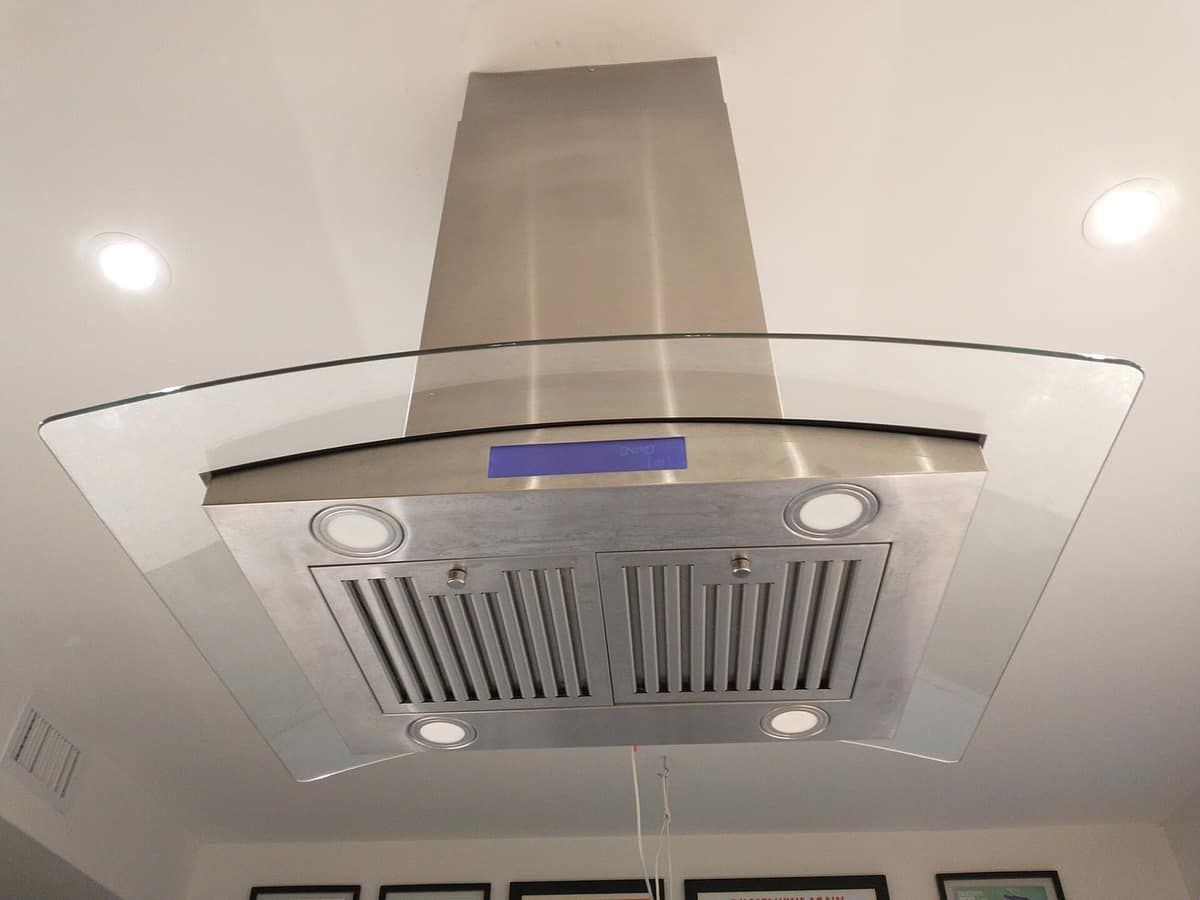
To install a StoveTop FireStop Rangehood, confirm the underside of your hood is 24 to 35 inches above the cooktop, clean and dry a spot on each side centered between the front and back burners, and lift each canister up until its magnet holds. If your hood is non-magnetic stainless, fit the maker’s $2.75 adhesive washer kit first. That’s the whole job, per the maker’s manual.
Everything below follows StoveTop FireStop’s own documents: the current Rangehood User Manual (675-3-117 Rev G, April 2025, linked from the product page), the company’s FAQ, and the Rangehood/STFS Plus Adhesive Mounting Kit insert (675-123). For whether it’s worth buying, see the StoveTop FireStop review; for how it compares with other options, see the kitchen safety devices guide. This is a research guide; see how we research.
Installation specs at a glance
| Spec or measurement | Value | Source |
|---|---|---|
| Rangehood mounting height | 24 to 35 in (61 to 88 cm), cooktop to mounting point | Rangehood manual, Rev G |
| STFS Plus mounting height | 22 to 32 in | Maker’s FAQ (2017 PDF) |
| Microhood clearance | 15 to 27 in below a microwave or cabinet | Maker’s FAQ (2017 PDF) |
| Placement | Midpoint between the centers of the front and back burners, each side | Rangehood manual, Rev G |
| Units per stove | One pair for a typical four-burner stove (manufacturer claim) | Maker’s FAQ |
| Adhesive kit contents | 2 metal washers, 2 adhesive discs, 1 alcohol prep pad | Kit insert, 675-123 |
| Adhesive kit wait | 60 minutes, per the insert | Kit insert, 675-123 |
| Adhesive kit price | $2.75, Sep 27, 2026 | Maker’s kit page |
| Effective life | Six years; replace-by date on the label | Maker’s FAQ |
Before you install: stove type, oil limit and date code 4516
- Check the stove. The 2017 manual said the Rangehood was not recommended for gas stoves because the powder may put out the burner flame. The current manual instead refers gas-stove users to a statement on the maker’s site. That statement says the product has been tested on gas and electric stovetops and could put out a gas burner in some circumstances. It doesn’t shut off the gas, so turn the stove off after it deploys if it’s safe to. The manual says it’s designed for no more than 3/8 inch of oil before food is added.
- Check the date code. The CPSC recalled Rangehood units made November 7 to 13, 2016; they have date code 4516 stamped under the magnet assembly (CPSC recall 20-037). Also note the replace-by date on the label; the maker gives a six-year effective life.
- Don’t drop it. The manual says to discard a unit that has been dropped or damaged.
- You’ll need: a tape measure, a pencil or painter’s tape, a clean dry cloth, and a fridge magnet to test your hood.
Step 1: Measure the hood height
Measure from the cooking surface up to the underside of the hood where the magnet will sit. The current manual’s range for the Rangehood is 24 to 35 inches (61 to 88 cm), and the product page’s height chart shows the same 24 to 35 inches. The 2017 manual and the maker’s FAQ still say 27 to 35 inches.
If a microwave or cabinet sits 15 to 27 inches above the cooktop instead, the maker’s FAQ says you need its Microhood, which attaches to the back wall with the included drywall anchors and screws. Above 35 inches, the Rangehood is outside the maker’s stated range.
Step 2: Mark the mounting points
Per the manual, position each canister at the midpoint between the center of the front burner and the center of the back burner, one on each side. Mark both spots.
Step 3: Test the magnet
Hold a fridge magnet to each marked spot. If it sticks, go to step 5. If not, the maker’s FAQ says to order its alternative mounting kit, as long as the hood is within the stated height range (the FAQ says 27 to 35 inches; the current manual says 24 to 35). The kit page says it’s for stainless steel or other non-magnetic hoods.
Step 4 (non-magnetic hoods only): Fit the adhesive washers
The kit contains two metal washers, two adhesive discs and an alcohol prep pad; the maker’s page says the adhesive was developed by 3M. Per the kit’s insert:
- Use the prep pad to clean the spots you marked, and make sure each is completely dry and free of grease.
- Peel the backing from one side of an adhesive disc and stick it to a metal washer.
- Peel the remaining backing from the other side of the disc.
- Press the washer assembly firmly onto the marked spot, then wait 60 minutes.
- Once the washers are firmly secured, attach each canister’s magnet directly to its washer.
The insert warns that not following its instructions could affect product performance.
Step 5: Clean, dry and hang
The manual says to clean and dry the areas where the magnets will attach, then raise each canister to the spot directly above. The 2017 FAQ adds that the canisters may tilt slightly depending on the hood. Finally, the manual says to put the enclosed decal where it can be seen in the ventilation hood.
Keeping StoveTop FireStop working for its six-year life
The maker’s FAQ says the canisters need no maintenance, inspections or repairs during their six-year life. It says grease build-up can be gently wiped with a damp cloth, keeping liquid off the fuse and the label. The manual is stricter: both the 2017 edition and the current Rev G say simply “do not clean units”, so if in doubt, leave them alone. The manual warns that missing the replace-by date could reduce effectiveness, so write the date somewhere you’ll see it.
StoveTop FireStop safety notes: don’t test it with a fire
- Don’t test it by lighting a fire. It’s single use: the manual says to discard it after activation, and Reviewed.com lists single use as a con (Reviewed).
- Know its limits. The manual says it may not suppress all stovetop fires and that reignition is possible. If it activates, the manual says to turn the burner off right away if it’s safe to.
- It isn’t UL-listed. StoveTop FireStop’s FAQ says it doesn’t have UL certification. The review covers what that means.
- It doesn’t replace the basics. The U.S. Fire Administration says to stand by your pan and turn the burner off if you leave the kitchen (USFA). NFPA’s cooking safety tip sheet says to smother a small pan fire with a lid and turn off the burner, and if you have any doubt, get out and call 9-1-1 from outside.
- Keep an extinguisher by the exit. See the Kidde FA110G review, including how to check whether yours is on the 2017 recall.
More on StoveTop FireStop and kitchen fire safety
Frequently asked questions
How high should StoveTop FireStop be mounted?
Mount the Rangehood 24 to 35 inches above the cooktop, measured to the underside of the hood, per the current manual (675-3-117 Rev G). The 2017 manual and the maker's FAQ still give 27 to 35 inches. If a microwave or cabinet sits 15 to 27 inches above the cooktop, the maker's FAQ says to use its Microhood model instead.
Will StoveTop FireStop stick to a stainless steel hood?
Only if the hood is magnetic, and many stainless hoods aren't; a fridge magnet will tell you. For non-magnetic hoods the maker sells an adhesive mounting kit, listed at $2.75 on September 27, 2026. Per the kit insert, it holds two metal washers, two adhesive discs and an alcohol prep pad, and you wait 60 minutes before hanging the canisters.
Where do you place StoveTop FireStop canisters?
Place one canister on each side, at the midpoint between the center of the front burner and the center of the back burner, per the Rangehood manual. The maker's FAQ says one pair covers a typical four-burner stove. Clean and dry each spot first, then lift each canister up until its magnet holds.
Should you clean StoveTop FireStop canisters?
The manual says not to. Both the 2017 edition and the current Rev G manual say "do not clean units". The maker's FAQ is softer: it says grease build-up can be gently wiped with a damp cloth, keeping liquid off the fuse and the label. If in doubt, leave them alone and replace them by the date on the label.
Sources
- stovetopfirestop.com/wp-content/uploads/2026/04/675-3-117-Rev_G-STFS_RH_Manual_artwork_PRESS.pdf
- stovetopfirestop.com/wp-content/uploads/2017/10/675-3-117-Rev_B-STFS_RH_Manual_WEB.pdf
- stovetopfirestop.com/gasstove
- stovetopfirestop.com/wp-content/uploads/2017/10/STFS-FAQ_NEW2.pdf
- stovetopfirestop.com/faq
- stovetopfirestop.com/wp-content/uploads/2025/03/675-123-STFS-RH-Adh_Mntg_kit_inser_PRESS.pdf
- stovetopfirestop.com/product/stovetop-firestop-rangehood-plus-adhesive-kit
- stovetopfirestop.com/product/rangehood
- cpsc.gov/Recalls/2020/WilliamsRDM-Recalls-Cooktop-Fire-Suppressors-Due-to-Risk-of-Failure-to-Activate-and-Suppress-Fires
- reviewed.com/home-outdoors/best-right-now/the-best-fire-extinguishers-for-homeowners
- sanfordfl.gov/wp-content/uploads/2021/10/CookingSafety.pdf
- usfa.fema.gov/prevention/home-fires/prevent-fires/cooking