How to Descale an Espresso Machine: What 4 Manuals Say
How to descale an espresso machine step by step, plus what Breville, Gaggia, De'Longhi and CASABREWS say about timing, vinegar and backflushing.
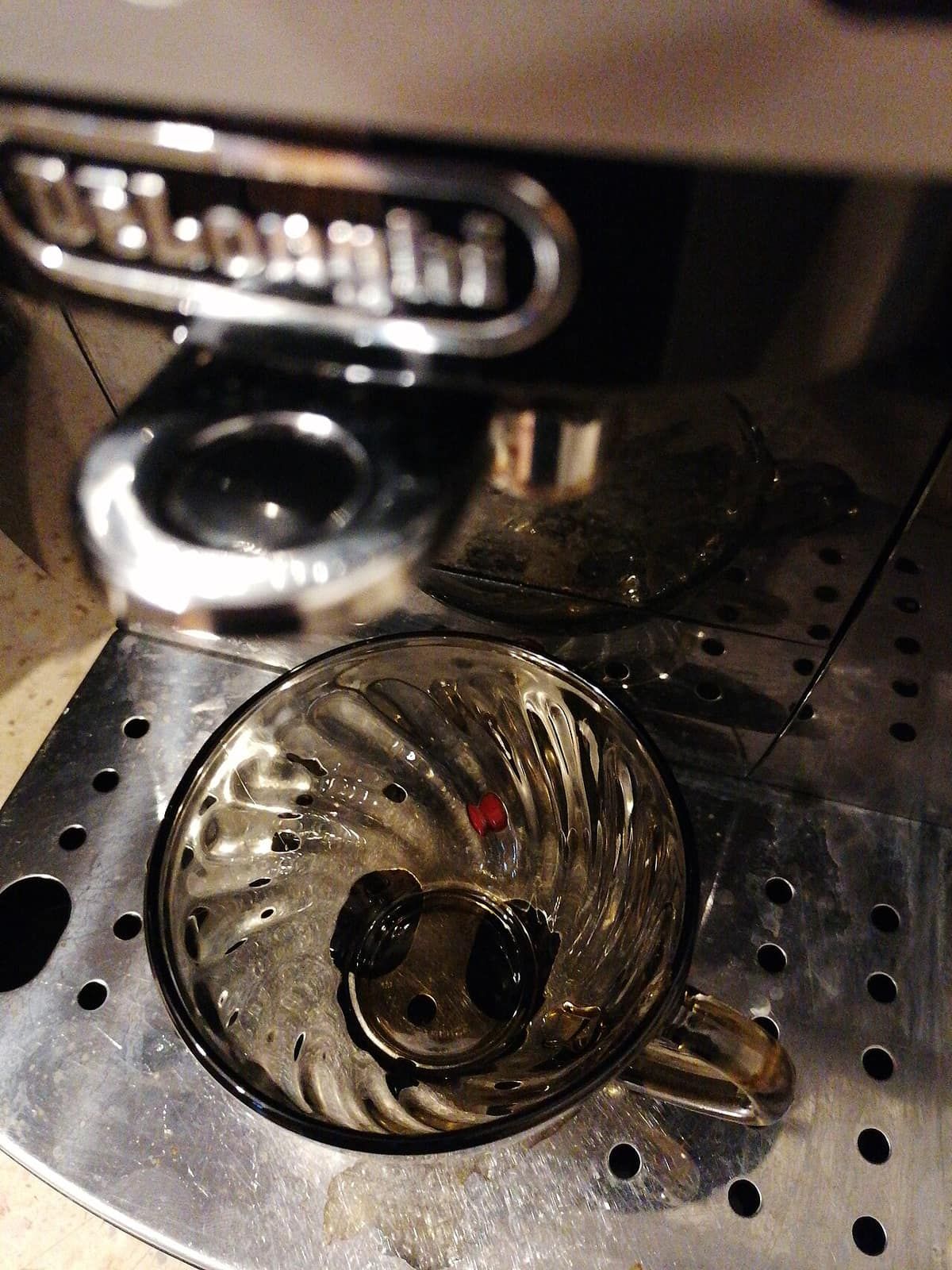
To descale an espresso machine, fill the tank with the descaler your manual names at its ratio, then run the solution through the outlets the manual lists (group head, steam or hot-water wand) in short bursts, pausing so it can work. Rinse afterward with clean water: one full tank on the Breville Barista Express, four on the Gaggia Classic Pro. Repeat when the descale alert comes on; Gaggia’s manual says every 2 months in one section and 2-3 in another, and the CASABREWS CM5418 alerts after 500 brew cycles.
Key facts before you start:
- Descaling removes mineral build-up such as lime and calcium from the water system, and backflushing removes coffee oil from the brew head, per Seattle Coffee Gear. Breville’s version of backflushing uses a cleaning disc and a cleaning tablet in the portafilter. Both Breville manuals call them separate jobs.
- Never use vinegar if your manual bans it. Gaggia’s does, along with every descaler but its own.
- Never remove or completely empty the water tank during a descale cycle. Both Breville manuals say so.
- Don’t drink anything the machine dispenses until the whole cycle, rinse included, is finished, per Gaggia’s manual.
How often to descale an espresso machine
There’s no universal descaling interval. Each manual sets its own trigger, and they don’t agree.
The CASABREWS CM5418 manual shows a descaling warning after 500 brew cycles: all lights flash five times, and the warning returns at every start-up until you cancel it. Breville’s Barista Express BES870 lights its CLEAN/DESCALE indicator solid, and the Bambino Plus BES500 flashes its 1 CUP+STEAM and 2 CUP buttons alternately for 15 seconds. Neither Breville manual gives a number of shots or months for descaling.
De’Longhi’s Dedica descaling FAQ on its US website says the frequency depends on your water hardness and tells owners to run the water-hardness test so the machine’s descaling rate is set to match. That FAQ covers the Dedica, not the Stilosa.
Gaggia’s Classic Pro manual contradicts itself. Its descaling section says every 2 months, while its water note earlier in the same manual says periodic descaling is recommended every 2-3 months. Following the 2-month figure satisfies both statements.
Water treatment changes the schedule too. The BES870 manual says replacing the water filter every two months reduces the need to descale, and to change it more often in hard-water areas.
Retailers give wider ranges, and they don’t say where these come from. Seattle Coffee Gear suggests every one to three months depending on use. Alternative Brewing says about every two months on average, monthly with hard water.
Signs a descale is overdue
Breville’s manuals explain why it matters. Both the BES870 and BES500 say hard-water build-up ends up “reducing the brewing flow, brewing temperature, power of the machine” and the taste of the espresso.
The BES500 troubleshooting table lists “machine needs to be descaled” as a possible cause when no water flows from the group head, when espresso only drips from the spouts, and when there’s no steam. The BES870 table lists it for the same three problems, plus coffee that isn’t hot enough. A skipped descale is one cause among several in those tables, alongside an empty tank, a tank not locked in and too fine a grind.
If your machine shows these symptoms, start with the model pages: CASABREWS CM5418 not pumping water and Bambino Plus flashing lights.
What Breville, Gaggia, De’Longhi and CASABREWS say about descaling
The table puts four manuals and one De’Longhi FAQ side by side. Every cell is a manufacturer instruction from the named document. The De’Longhi row covers the Dedica, from De’Longhi’s own descaling FAQ, because I couldn’t open the Stilosa EC260 manual.
| Machine | Descale trigger / interval (manufacturer spec) | Descaler the manual names | Mix ratio (manufacturer spec) | Soak / pause | Rinse instruction | Vinegar / citric acid stance | Source (manual link) |
|---|---|---|---|---|---|---|---|
| Breville Barista Express BES870 | CLEAN/DESCALE light solid on | Breville Descaling powder | 1 sachet per 1 L (34 fl oz) | None stated; coffee circuit about 25 s, steam about 13 s, hot water about 8 s per pass | Full 2 L (68 fl oz) tank through all circuits | Not mentioned | BES870 manual |
| Breville Bambino Plus BES500 | 1 CUP+STEAM and 2 CUP flash alternately for 15 s | Descaling powder (supplied) | Fill to DESCALE line, add agent; amount not published | Cycle pauses when solution runs out | Refill to MAX and resume until standby | Not mentioned | BES500 manual |
| Gaggia Classic Pro RI9380 | Every 2 months (descaling section); every 2-3 months (water note) | GAGGIA descaling product only | Half the bottle, topped up with water to max | About 20 min off, then 3 min off between rounds | 4 full tanks, through wand and group | Bans vinegar and all other descalers | Classic Pro manual |
| CASABREWS CM5418 | Warning after 500 brew cycles | Household descaling agent or citric acid | 4 parts water to 1 part descaler; citric acid 100 parts water to 3 | 5 min off after each 100 ml | Repeat the process 2 more times with clean tap water (volume not stated) | Allows citric acid | CM5418 manual |
| De’Longhi Dedica (FAQ; Stilosa manual not read) | Descale light; frequency depends on water hardness | De’Longhi descaler only (recommends EcoDecalk) | Per the descaler pack | Automatic rinses and pauses until the tank is empty; about 25-30 min in all | 2 rinse cycles, tank filled to MAX each time | Unsuitable descaler may cause faults not covered by guarantee; vinegar not mentioned | De’Longhi US website FAQ, “Dedica and Dedica Arte: Descaling and Cleaning” |
The biggest gap is rinse volume. CASABREWS asks for two more clean-water rounds without stating a volume; Breville’s BES870 asks for one full tank, De’Longhi’s Dedica FAQ two, and Gaggia four. Follow your own manual rather than the average.
How to descale an espresso machine, step by step
These are the shared steps, each tied to the manual it comes from. Where the manuals disagree, I say so.
- Prepare the machine. The Bambino Plus manual says to turn it off and let it cool completely first. The Barista Express is the opposite: its descale mode heats the machine up before it starts. Follow your model’s instruction.
- Remove the portafilter and empty the drip tray. Gaggia’s first step is removing the filter holder, and the BES500 starts by emptying the drip tray. De’Longhi’s Dedica FAQ says to remove the water filter, if one is fitted, before descaling.
- Mix the descaler at your manual’s ratio. Breville’s BES870: one descaling powder sachet in 1 L of water. CASABREWS: 4 parts water to 1 part descaler, filled to MAX. Gaggia: half a bottle of its descaler, topped up with fresh water to max.
- Put a large container under the group head and wand. The BES500 manual specifies a 2 L (68 fl oz) container under the portafilter and steam wand.
- Run the solution in short bursts through the outlets your manual names. Gaggia dispenses two cups of about 150 ml each from the steam wand, then two from the brew unit. The BES870 runs the coffee circuit for about 25 seconds, steam for about 13 and hot water for about 8. CASABREWS lets about 100 ml (3.4 oz) through on the 2 cup button, from the coffee outlet only.
- Let it sit. Gaggia leaves the machine off for about 20 minutes after the first round, then 3 minutes between later rounds. CASABREWS waits 5 minutes after each 100 ml.
- Repeat until the tank is empty, without removing it mid-cycle. CASABREWS repeats its burst three more times. The BES870 manual says about half (0.5 L) of the solution remains after one pass, so you run the circuits again. Both Breville manuals warn never to remove or completely empty the tank during descaling.
- Rinse with clean water. Gaggia runs one full tank through the steam wand, a second through the filter holder, then repeats both, for four tanks in total. The BES870 refills to the 2 L maximum and runs every circuit again. CASABREWS repeats its cycle twice more with clean tap water. Gaggia says not to drink anything dispensed before the cycle ends.
- Clear the alert. CASABREWS: hold 1 cup, 2 cup and Steam together for 3 seconds. The BES870 quits descale mode when you press POWER, and the BES500 returns to standby by itself.
If your machine has a descale mode
Breville’s machines run a guided cycle. On the BES870, hold the 2-CUP button and then the POWER button together; the machine heats up and lights POWER, 1 CUP, CLEAN/DESCALE and HOT WATER/STEAM solid when it’s ready. It turns itself off after 5 minutes without input, and you restart from the descale-mode step. The full sequence is in Breville Barista Express descaling.
On the BES500, turn the machine off, then hold 1 CUP and STEAM for 5 seconds. Press 1 CUP or STEAM to start, refill to MAX when it pauses, and press again to resume.
Espresso machine descaler vs vinegar (and citric acid)
Use the descaler your manual names. The manuals disagree on alternatives, and only one allows citric acid.
- Gaggia is strictest: use the GAGGIA descaling product only and “never use vinegar or other descaling agents.”
- De’Longhi (Dedica FAQ) says to use De’Longhi descaler only, warning that “using an unsuitable descaler and/or performing descaling incorrectly may result in faults not covered by the manufacturer’s guarantee.”
- Breville names its own descaling powder and says nothing about vinegar or citric acid.
- CASABREWS is the only one here that allows an alternative. It accepts a household descaling agent or citric acid at 100 parts water to 3 parts citric acid.
Retailer and brand blogs go further and say vinegar harms machines, but they disagree on how. HiBREW and Happily Coffee say it can damage rubber seals and leave odors; Happily Coffee adds to avoid it unless your manufacturer allows it. Alternative Brewing says it slowly erodes metal components, especially in machines with aluminium tanks, and that unflushed traces hurt the coffee’s taste. I found no manufacturer or independent test data behind either claim, so treat them as advice, not measurements.
For drip brewers, where the vinegar question plays out differently, see vinegar vs descaler for coffee makers.
Descaling vs backflushing: different jobs, different signals
| Descaling | Backflushing | |
|---|---|---|
| What it removes | Mineral scale (lime, calcium) from the water system, per Seattle Coffee Gear | Coffee oil from the brew head, per Seattle Coffee Gear |
| Breville BES870 signal | CLEAN/DESCALE light solid on | CLEAN/DESCALE light flashing |
| Breville BES500 signal | 1 CUP+STEAM and 2 CUP flash alternately | 1 CUP and 2 CUP flash alternately, after 200 extractions (Breville calls it a flushing cycle) |
| What you use (Breville manuals) | Descaler in the tank | Cleaning disc in the basket plus a cleaning tablet |
Both Breville manuals keep the two separate. The BES870 calls its cleaning cycle “a back-flushing cycle” that “is separate from descaling,” and the BES500 calls its version a flushing cycle, also separate from descaling.
The shared BES870 light is the easy one to misread. Flashing means run the cleaning cycle with the disc and a tablet; only a solid light means descale.
Not every machine can be backflushed. Seattle Coffee Gear says it is only done on semi-automatics with a three-way solenoid valve, and suggests weekly backflushing if you use the machine daily. The model-specific steps are in Barista Express descaling.
How water and filters change how often you descale
Every maker here links scale to water, and Breville and De’Longhi point to their own water filters. The BES870 manual says changing its water filter every two months reduces the need to descale. De’Longhi’s Dedica FAQ recommends its water filter to widen the time between descales, plus the hardness test.
Gaggia’s manual recommends purified or bottled water for taste, but still says periodic descaling is recommended. Better water doesn’t remove the job.
For target numbers, a 43factory summary of the SCAA water standard lists total dissolved solids of 75-250 mg/L with a target around 150 mg/L, and calcium and magnesium hardness of 51-68 mg/L. That’s a secondary source, so check it against the SCA’s own handbook before relying on it.
What we couldn’t confirm
- The De’Longhi Stilosa EC260 manual’s descaling interval, ratio and rinse. The manual hosts I tried were blocked, so the table uses De’Longhi’s Dedica FAQ instead.
- How much scale actually slows flow or cuts brew temperature. I found no independent measurement, so this page relies on manufacturer statements.
- Owner reports from Reddit and retailer reviews weren’t collected this round.
How I source pages is explained on how we research.
More on espresso machines
- Best espresso machines
- Breville Barista Express descaling
- Single vs double boiler espresso machines
- Descaling a drip coffee maker
- CASABREWS CM5418 review
- Breville Bambino Plus review
- How we research
Frequently asked questions
How often should you descale an espresso machine?
Descale when your machine's descale alert comes on, because each maker sets its own trigger. The CASABREWS CM5418 alerts after 500 brew cycles, Breville's Barista Express and Bambino Plus signal with lights, and De'Longhi's Dedica FAQ ties the interval to your water hardness. Gaggia's Classic Pro manual says every 2 months in one place and every 2-3 months in another.
Can I use vinegar to descale my espresso machine?
Not if your manual forbids it, and Gaggia's does: its Classic Pro manual says never to use vinegar or other descaling agents. De'Longhi's Dedica FAQ says to use only its own descaler and warns that an unsuitable one may cause faults its guarantee doesn't cover. Breville names its own descaling powder. None of the four manuals read here approves vinegar.
Can I descale an espresso machine with citric acid?
Only if your manufacturer allows it. Of the five machines compared here, only the CASABREWS CM5418 manual permits citric acid, mixed at 100 parts water to 3 parts citric acid. Gaggia bans every descaler but its own, De'Longhi's Dedica FAQ says to use only De'Longhi descaler, and Breville specifies its own descaling powder. Check your manual before mixing anything yourself.
What is the difference between descaling and backflushing?
Descaling removes mineral scale from the water system, while backflushing clears coffee oil from the brew head. Breville's Barista Express manual calls its cleaning cycle a back-flushing cycle that is separate from descaling. The Bambino Plus manual calls its version a flushing cycle. Seattle Coffee Gear says backflushing only applies to semi-automatics with a three-way solenoid valve and suggests weekly backflushing for daily use.
Does the Breville CLEAN/DESCALE light mean I need to descale?
Only when it stays solid. Breville's Barista Express BES870 manual says a solid CLEAN/DESCALE light means descale, while a flashing light means run the cleaning cycle, a back-flushing cycle with the cleaning disc and a tablet. The Bambino Plus uses different signals: alternately flashing 1 CUP and 2 CUP buttons ask for cleaning after 200 extractions.
Sources
- breville.com/content/dam/breville/us/assets/miscellaneous/instruction-manual/espresso/BES870-instruction-manual.pdf
- assets.breville.com/BES500/BES500_USCM_IB_T23_LR.pdf
- gaggia.com/app/uploads/2023/07/4219-465-10461-MANUAL-GAG.-CLASSIC-USA-Rev-00_Classic_Energy_Vibes_Evo.pdf
- images.thdstatic.com/catalog/pdfImages/58/5813c2fe-09de-4675-9a65-b6fdef428dc3.pdf
- delonghi.com/en-us/faqs/Dedica-and-Dedica-Arte:-Descaling-and-Cleaning/a/570258
- seattlecoffeegear.com/blogs/scg-blog/tune-backflushing-vs-descaling
- 43factory.coffee/en/news/dissecting-scaas-water-quality-standard
- alternativebrewing.com.au/blogs/news/how-to-descale-espresso-machine
- happilycoffee.com/blogs/news/how-to-descale-an-espresso-machine-step-by-step-guide-when-to-do-it
- hibrew.com/blogs/product-guides/descaling-espresso-machines