Is a Blender Jar Dishwasher Safe? What Each Manual Says
The Ninja BL610 and nutribullet NBF50500 jars can go in the dishwasher; the Vitamix 5200 container cannot. What each manual says, model by model.
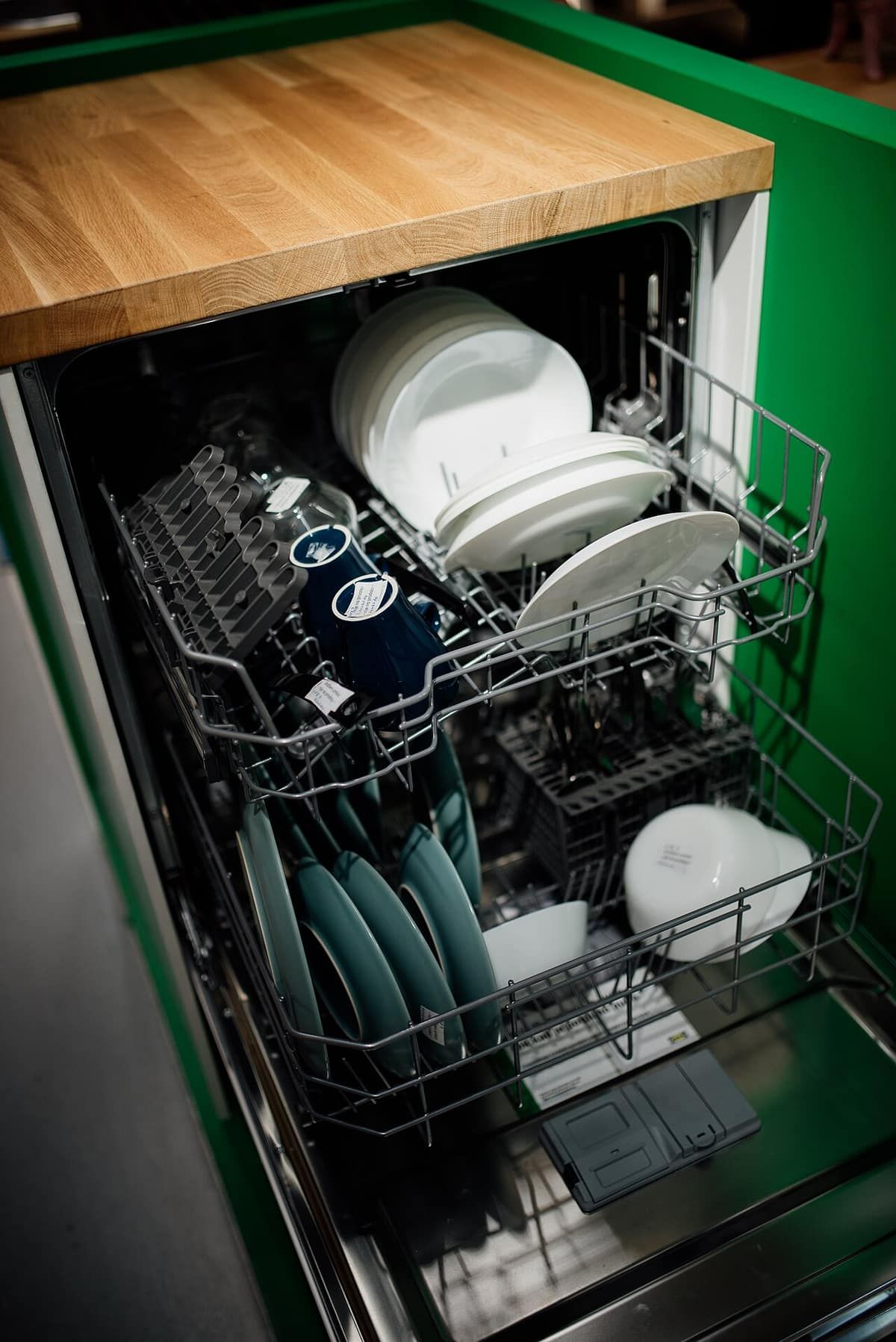
Is a blender jar dishwasher safe? It depends on the model. The Vitamix 5200 manual says no for the container, lid and lid plug. Ninja’s BL610 guide says yes, with the lid and blade on the top rack. nutribullet’s NBF50500 guide says cups go top rack only and never on the sanitize cycle.
The one rule that holds across brands: check the manual for your model number.
Nobody at Kitchen Watcher ran any of these jars through a dishwasher. Everything below is quoted or paraphrased from the manufacturer’s own manual or care page, linked in each row. See how we research.
Dishwasher rules by blender model, from each manual
| Blender / vessel | Jar or cup in dishwasher? | Rack | Blade assembly | Cycle or heat warning | Source (manual/page, linked) |
|---|---|---|---|---|---|
| Vitamix 5200 container | No, nor the lid or lid plug | Not applicable | No dishwasher rule given; if the retainer nut loosens, stop using the container | Wet blades used for grinding can mar and cloud the container | Vitamix 5200 owner’s manual |
| Vitamix S-Series 20 oz and 40 oz, S30 | Yes | Top rack | S30 blade base: top rack | None for the dishwasher; the FAQ says to rinse any container with warm water, not hot, after use | Vitamix care and maintenance FAQ (vitamix.com) |
| Ninja Professional BL610 pitcher | Yes, plus lid and blade assembly | Top rack recommended for lid and blade | Remove from pitcher first; dishwasher safe | Do not expose pitcher to extreme temperature changes | Ninja BL610 owner’s guide |
| Ninja BN750-series containers | Yes, all attachments | Top rack only | Remove blades and lids from containers first; top rack only | Not published | Ninja BN750-series owner’s guide |
| nutribullet NBF50500 cups and to-go lids | Yes | Top rack only | Extractor blade: hand-wash | Never use the sanitize cycle; heat can warp the plastic | nutribullet NBF50500 user guide |
| nutribullet NBF50500 pitcher | Yes, or hand-wash if preferred | Not published | Not published | Never use the sanitize cycle; heat can warp the plastic | nutribullet NBF50500 user guide |
| Blendtec jars | Yes | Top rack; bottom rack OK for large jars if not wedged in; lid and insert top rack only | Not published | No heated dry on the bottom rack; jar max 176°F (80°C) (manufacturer spec) | Blendtec use and care page (blendtec.com) |
Vitamix: the 5200 container is a no, some newer containers are a yes
The 5200 manual is blunt: “do not put the container, lid, or lid plug in the dishwasher.” Its normal cleaning method is to fill the container half full with warm water and a couple drops of dish soap, lock the lid, and run it up to High for 30 to 60 seconds. To sanitize, it adds 1 1/2 teaspoons of liquid bleach to a half-full container of water, runs it the same way, lets it stand 1 1/2 minutes more, then says to pour it out and air dry without rinsing. The manual also says that not following its safeguards is misuse that can void the warranty.
Vitamix’s own pages don’t agree on which newer containers can go in. Its cleaning article says earlier models’ containers were not dishwasher safe and “newer blending containers” can be. It also calls blender lids and tampers dishwasher safe, which the 5200 manual contradicts for its lid. Its care FAQ is narrower: it says Vitamix does not recommend putting the container or lid in the dishwasher because it may harm the components, and lists only the S-Series 20 oz and 40 oz containers, plus the S30’s containers, blade base, lids, seals and tamper, as top-rack safe.
Since the FAQ is the more specific of the two, check the manual that came with your container before trusting either.
The 5200 is the high-end pick on our blender hub, and the manual’s no-dishwasher rule is one of the trade-offs we cover in Vitamix 5200 vs Ninja BN701.
Ninja: dishwasher safe, but take the blade out first
Ninja’s BL610 guide says “The pitcher, lid and blade assembly are all dishwasher safe,” recommends the top rack for the lid and blade, and says to remove the blade assembly from the pitcher before it goes in. Its safety list also says “DO NOT expose pitcher to extreme temperature changes.” The BN750-series guide covers a different model from the BN701 (both are sold under Ninja’s Professional Plus Auto-iQ name). It says all attachments are BPA free and dishwasher safe, top rack only, with blade assemblies and lids removed from the containers first.
We have not read the BN701’s or the DB351’s own guide, so we don’t state their rules here.
How the two full-size Ninjas compare on everything else is in Ninja BL610 vs BN701.
nutribullet: top rack, never the sanitize cycle
The NBF50500 guide says the pitcher is dishwasher safe while the cups and to-go lids are “TOP RACK dishwasher-safe.” It says to “NEVER use the sanitize cycle to wash the cups — heat this high can warp the plastic,” and repeats the warning for the pitcher, which it says can also be hand-washed if you prefer. It says to rinse and briefly scrub before loading, and that the extractor blade and motor base are hand-washed with soap and water.
nutribullet’s own sources conflict on the blade. Its cleaning blog says cups, lids, lip rings and blades are all top-rack dishwasher safe, then recommends hand-washing blades because heat from some dishwashers may damage the gaskets and cause them to loosen and fall out. The user guide simply says hand-wash, so we side with the guide. See how the NBF50500 compares in nutribullet NBF50500 vs Ninja BN701.
Blendtec jars: top rack, and a 176°F limit
Blendtec’s use and care page says its jar is dishwasher safe on the top rack. Large jars can go on the bottom rack if they aren’t wedged in tightly. Heat can make the jar expand or contract slightly so the lid fits poorly, and Blendtec says the warranty does not cover that.
It says to skip the heated dry on the bottom rack, and to put the lid and clear insert on the top rack only, since they can warp. It also says not to submerge a jar longer than 5 minutes, since water can get into the lower jar seals. Its stated jar limit is 176°F (80°C) (manufacturer spec). Blendtec isn’t on our hub, so this is context only.
Parts no manual lets in the dishwasher
- Motor base: no manual read here allows it in the dishwasher. The Vitamix 5200 manual says do not place it in water, the BL610 guide says do not immerse it, the BN750 guide says wipe it with a clean damp cloth and no abrasive cloths, pads or brushes, and the NBF50500 guide says wipe it with a sponge or cloth dampened with warm soapy water. nutribullet’s cleaning blog adds that the base should never be submerged or put in the dishwasher.
- nutribullet extractor blade: hand-wash per the NBF50500 guide, which also says not to remove any blade components, because that can cause permanent damage and leakage, and to dry the blade completely after every use.
- nutribullet gasket: the cleaning blog says never remove the gasket from the blade.
- Vitamix 5200 lid and lid plug: warm soapy water, per the manual.
Why blender jars go cloudy, and whether it matters
Vitamix’s care FAQ blames minerals from fruits, produce and leafy greens for the film, and its cleaning article calls the film a natural outcome of blending mineral-rich fruits and vegetables, adding that hard water may contribute. Its fix is 1 cup of white vinegar, warm water to half full, soaked upright for several hours, then a soft pot scrubber.
The 5200 manual adds that grinding grains will cloud the lower three inches (8 cm) of the container. Blendtec’s help center says grinding grains, legumes, beans, rice or nuts may fog a jar, and some greens, spices and protein powders can cloud it too. It calls this cosmetic, says it does not affect performance, and says it is not covered by the jar warranty.
For cloudy cups, nutribullet’s blog suggests a 10% bleach-to-water solution left a short time, then a rinse, a wash in warm soapy water and another rinse. For stains, Blendtec’s help center lists a hot-water-and-bleach soak, and says others have had success with lemon juice and baking soda or vinegar and baking soda.
The evidence is thin on one point people ask about most. We found no independent measurement of how many dishwasher cycles it takes to cloud a blender jar.
Blendtec says its jars are Eastman Tritan copolyester but doesn’t name the grade. Eastman’s page for Tritan EX501, a grade it says was developed for infant care such as baby bottles, claims “glass-like clarity even after multiple dishwasher cycles.” That is the material maker’s claim about a different product grade, not a blender test, and it gives no cycle count.
For what BPA-free labels do and don’t tell you, see are plastic coffee makers safe.
When a cloudy jar means replace it
nutribullet’s guide turns cloudiness into a safety question: “Discontinue use and replace blending vessels if you detect cracking, cloudiness, or damage to the plastic.” It also says to check the pitcher and its threads for cracking, crazing or breakage. The Vitamix 5200 manual says that if the retainer nut at the bottom of the container loosens and no longer holds the blade assembly securely, stop using the container and call Vitamix.
Recalls are a separate check: the CPSC’s 2024 recall notice covers Vitamix Ascent Series and Venturist Series 8 oz and 20 oz blending containers and blade bases. For other models, see our blender recall check.
If your manual says hand-wash
Per their manuals, the Vitamix 5200 container is cleaned by blending warm soapy water, and the nutribullet extractor blade is washed by hand. For the step-by-step method, see how to clean a blender.
More on blenders
- Best blenders
- How to clean a blender
- Can you put hot liquid in a blender?
- Personal vs full-size blender
- Blender recall check
- How we research
Frequently asked questions
Is the Vitamix 5200 container dishwasher safe?
No. The Vitamix 5200 owner's manual says not to put the container, lid or lid plug in the dishwasher, to ensure continued and effective performance. It says to clean the container by blending warm water with a couple drops of dish soap on High for 30 to 60 seconds, then rinsing. The lid and plug get washed in warm soapy water.
Can Ninja blender pitchers go in the dishwasher?
Yes, for the models we read. Ninja's BL610 owner's guide says the pitcher, lid and blade assembly are all dishwasher safe, with the lid and blade assembly recommended for the top rack. Its BN750-series guide says lids, containers and blade assemblies go on the top rack only. Both say to remove the blade assembly from the container first.
Why can't I use the sanitize cycle on nutribullet cups?
Because nutribullet says the heat can warp the plastic. Its NBF50500 Blender Combo user guide says to never use the sanitize cycle on the cups, and gives the same warning for the pitcher. The cups and to-go lids are rated top rack only. The extractor blade and motor base are meant to be hand-washed with soap and water.
Why is my blender jar cloudy, and can I fix it?
Vitamix says minerals from fruits, produce and leafy greens leave a film, and both Vitamix and Blendtec say grinding grains or dry ingredients can cloud a jar. Vitamix's fix is 1 cup of white vinegar plus warm water to half full, soaked upright for several hours. nutribullet's blog suggests a 10% bleach solution for cloudy cups. Blendtec calls dry-grinding fog cosmetic.
Does a cloudy blender jar need to be replaced?
nutribullet says yes for its vessels. Its NBF50500 user guide says to discontinue use and replace blending vessels if you detect cracking, cloudiness or damage to the plastic. Blendtec, by contrast, says fog from grinding grains is cosmetic, does not affect performance and is not covered by warranty. Follow the manual for your own blender.
Sources
- vitamix.com/media/catalog/product/file/Vitamix-5200-Owners-Manual.pdf
- vitamix.com/vr/en_us/owners-resources/product-support/faqs/care-and-maintenance
- vitamix.com/us/en_us/articles/how-to-clean-a-blender-guide
- nbmedia.imgix.net/NBF50500_BlenderCombo_UserGuide_English_LoRes_PROOF_F20221010.pdf
- nutribullet.com/blog/how-to-clean-your-nutribullet
- images.thdstatic.com/catalog/pdfImages/96/96658f8a-6590-4519-a0bc-97a4c1e1c784.pdf
- files.bbystatic.com/JrTT46xb3u1jhf%2B6nsafyw==/Owners%2BGuide
- blendtec.com/pages/use-and-care
- blendtec.com/apps/help-center
- eastman.com/en/products/product-detail/71104607/eastman-tritan-ex501-copolyester
- cpsc.gov/Recalls/2024/Vitamix-Reannounces-and-Expands-Recall-of-Ascent-Series-and-Venturist-Series-8-ounce-and-20-ounce-Blending-Containers-and-Blade-Bases-Due-to-Laceration-Hazard-Offers-New-Repair-Kit-Due-to-Additional-Injuries