Thermal vs Glass Carafe Coffee Maker: What the Data Shows
Thermal vs glass carafe coffee maker: measured heat loss, hot plate shutoff times, the burnt-coffee question, and which carafe fits how slowly you drink.
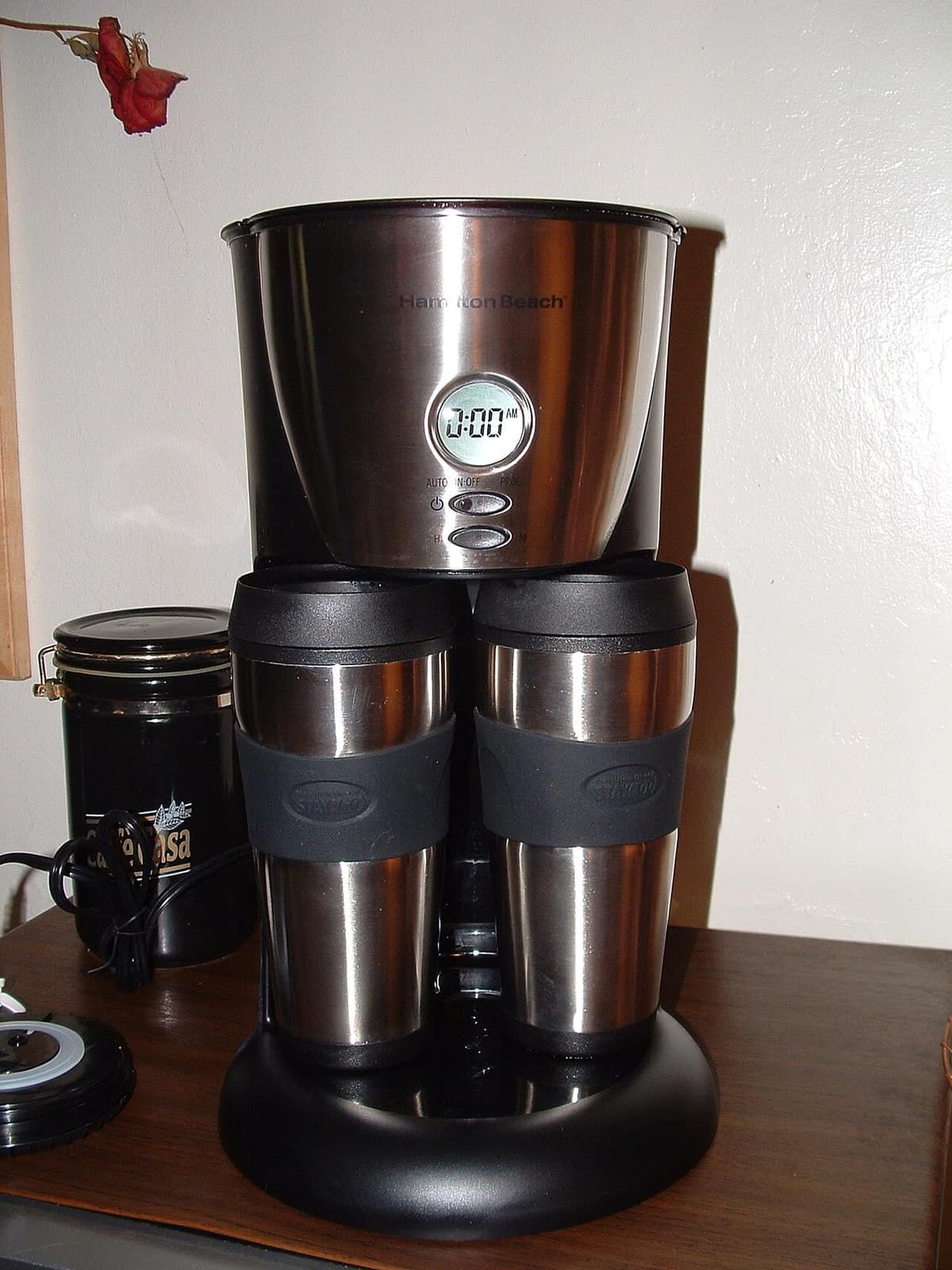
In the thermal vs glass carafe coffee maker question, the first hour is close to a tie. Consumer Reports says it finds no significant difference in temperature loss between the two. On average, glass carafes on hot plates varied about 2.5°F either way after an hour, while thermal carafes lost about 4°F. The thermal carafe does it with no heat underneath, which America’s Test Kitchen says is the easiest way to keep coffee hot “without scorching it.”
If you finish the pot within an hour, either works. If it sits longer, ATK’s advice is direct: if you don’t drink all your coffee right away, go for a thermal carafe.
How a thermal carafe and a hot plate keep coffee hot
A thermal carafe is an insulated vessel with no heater. Coffee goes in hot and loses heat slowly. CNET describes the OXO Brew 8-Cup’s carafe as vacuum-insulated stainless steel and notes the machine has no hot plate at all.
A glass carafe sits on a warming plate. Per Consumer Reports, hot plates keep coffee hot by cycling power on and off, which is why the temperature drifts a few degrees up and down instead of only falling.
America’s Test Kitchen says most glass-carafe machines use the same element to heat the brew water and the hot plate. A few models have a separate, gentler plate heater with an automatic shutoff. ATK still found those “slightly overheated coffee before letting it go cold.”
Glass carafe heat retention vs glass-lined thermal carafes
ATK’s numbers for two Moccamaster brewers are the closest same-brand comparison published. ATK checked carafe temperatures on their hot plates where a machine has one. The glass-carafe KBGV Select’s coffee was 180°F right after brewing, against 186°F in the thermal KBT, and ATK says the glass-carafe model “lost heat much faster over the next 2 hours.” Moccamaster says the KBGV’s hot plate has its own heating element (manufacturer spec).
“Glass” and “thermal” also overlap. Moccamaster describes the KBT’s thermal carafe as glass-lined stainless steel and claims its borosilicate glass lining keeps coffee hotter longer (manufacturer claim, not a measurement).
Thermal vs glass carafe temperatures: every published number
| Data point | Thermal carafe (no hot plate) | Glass carafe on hot plate | Model / context | Source (measured by or ‘manufacturer spec’) |
|---|---|---|---|---|
| Change after 1 hour | Lost about 4°F | Varied about 2.5°F either way | Averages across CR’s coffee maker tests | Consumer Reports |
| Right after brewing → 60 min | OXO Brew 8-Cup: 177°F → 169°F | Ninja 12-Cup Programmable: 178°F → 173°F | 8 cups brewed; readings at 0, 15, 30 and 60 min | CNET |
| Right after brewing → 60 min | Not published | Cuisinart PerfecTemp 14-Cup: 176°F → 172°F | Same CNET run | CNET |
| Fresh-brew temperature, same brand | Moccamaster KBT: 186°F | Moccamaster KBGV Select: 180°F | Coffee in the carafe right after brewing | America’s Test Kitchen |
| Fresh-brew temperature, other picks | OXO Brew 8-Cup: 183°F | Zojirushi ZUTTO (glass carafe): 179°F | Different machines | America’s Test Kitchen |
| How long it stayed hot | KBT: “piping hot for 2 hours” | KBGV Select: lost heat “much faster” over 2 hours | Same brand, ATK’s notes | America’s Test Kitchen |
| How long it stayed hot | KBT 741: hot “for a full 6 hours”; OXO: at 160°F “for hours” | Ninja 12-Cup Programmable: stable “for more than two hours” | CNET’s written notes | CNET |
| Maker’s own claim | KBT: quality “for up to an hour” | Not published | Moccamaster product page | Manufacturer spec |
| Keep-warm limit | No plate; KBT power light goes off 12.5 min after the reservoir empties | KBGV: auto-off at 100 minutes (Tom’s Guide says its U.K. unit stays warm for 40) | Moccamaster product pages | Manufacturer spec |
| Keep-warm limit | Not applicable (no plate) | Ninja CE251: 2 h by default, up to 4 h | Ninja CE251 owner’s guide | Manufacturer spec |
| Keep-warm limit | Not applicable (no plate) | Cuisinart DCC-3200C: Low, Medium or High plate; auto-off 0 to 4 h, 2 h by default | Cuisinart DCC-3200C instruction booklet (PDF) | Manufacturer spec |
CNET names the Ninja and Cuisinart only by product name, without model numbers; those names match the CE251 and the DCC-3200 (Cuisinart’s booklet carries the PerfecTemp 14-Cup Programmable name). CNET’s table also covers other machines; we show only the three covered on this site.
Two things stand out. Over one hour, CNET’s thermal OXO lost more heat (8°F) than the Ninja (5°F) or the Cuisinart (4°F), in line with Consumer Reports’ averages. And CNET’s 6-hour note and ATK’s 2-hour note concern the same KBT carafe that Moccamaster itself rates for an hour of quality.
Does a thermal carafe keep coffee hot? Yes, but sources disagree on how long
Yes, though the published durations for one carafe run from one hour to six. For the Moccamaster KBT, Moccamaster’s product page says the carafe maintains coffee quality “for up to an hour.” ATK says both the old carafe and the one redesigned in 2025 kept coffee piping hot for 2 hours. CNET says “a full 6 hours.”
Part of the gap may be what each source means. “Still hot” and “still tastes as good” are different thresholds, and Moccamaster’s claim is about quality, not temperature. ATK says it checked carafes 1 and 2 hours after brewing but published only fresh-brew temperatures. None of these sources published readings past one hour. So there is no public data showing when a thermal carafe drops below a given serving temperature.
What the one-hour data does show is a steady, small loss: CNET recorded the OXO’s coffee dropping 8°F over 60 minutes, with no reheating. Whether preheating the carafe with hot water helps is not covered by any of the sources on this page.
Why does hot plate coffee taste burnt?
ATK’s explanation is the heater itself. When one element heats both the water and the plate, ATK calls it “a recipe for scorched, bitter coffee,” and it found that even separate plate heaters slightly overheated coffee before letting it go cold. Consumer Reports makes a related point about reheating, saying microwaving coffee can make it taste bitter or burnt.
None of the sources on this page measured or explained the chemistry behind the burnt taste, so we don’t make claims about it.
Auto-off timers cap how long a plate stays on under the pot. The KBGV’s plate stops at 100 minutes per Moccamaster, which Tom’s Guide also reports for U.S. models. Ninja’s CE251 plate stops at 2 hours by default, or up to 4 if you set it, and Cuisinart’s DCC-3200C booklet gives 0 to 4 hours, 2 by default.
Pouring, cleaning, breakage and burn risk
- Weight and pouring. Consumer Reports says thermal carafes are generally heavier, which makes them harder to pour, and some dribble. CNET says the OXO’s thermal carafe doesn’t drip.
- Cleaning. Consumer Reports says thermal carafes can be harder to clean. Ninja’s CE251 guide says its glass carafe can go on the dishwasher’s top rack. ATK says the KBGV Select’s glass carafe is not dishwasher-safe.
- Breakage. ATK prefers stainless thermal carafes because glass can shatter. CNET notes the Ninja CE251 has thinner glass than pricier picks. ATK also notes that if you can’t find an affordable replacement glass carafe, the whole machine goes to the landfill. Ninja’s guide says not to use a cracked or scratched carafe, set a hot one on a wet or cold surface, or put it in a microwave.
- Burn risk. Consumer Reports says a hot plate is a potential burn risk, so a thermal carafe might be best with children at home.
Which carafe fits how slowly you drink
- You finish the pot within about an hour. Either works. Consumer Reports finds no significant difference over an hour, though CNET’s 60-minute readings had the Ninja and Cuisinart losing a few degrees less than the OXO.
- Coffee sits for two hours or more. Thermal, per ATK. It found that even plates with separate, gentler heaters “slightly overheated coffee before letting it go cold,” and plates sharing the brew element were worse.
- You brew a small amount. ATK accepts a glass carafe on the Zojirushi ZUTTO because its roughly 20-ounce batch “won’t sit around long.”
- Children in the house. Thermal, per Consumer Reports’ burn-risk note.
Carafe type on the coffee makers we cover
- OXO Brew 8-Cup: vacuum-insulated thermal carafe, no hot plate, per CNET. See the OXO Brew 8-Cup review.
- Ninja CE251: glass carafe on an adjustable warming plate, off after 2 hours by default and settable up to 4, per Ninja’s guide. See the Ninja CE251 review.
- Moccamaster KBGV Select: glass carafe, plate off at 100 minutes per Moccamaster. See the KBGV Select review and Moccamaster KBT vs KBGV Select for the thermal version.
- Cuisinart DCC-3200: glass carafe on a warming plate with Low, Medium and High settings and a 0 to 4 hour auto-off, per Cuisinart’s DCC-3200C booklet. See Ninja CE251 vs Cuisinart DCC-3200.
For how these machines compare overall, see the best coffee makers.
Where these numbers come from
Kitchen Watcher did not measure any temperatures for this page. Every figure comes from Consumer Reports, America’s Test Kitchen, CNET or Tom’s Guide, credited where it appears, or from Moccamaster’s product pages, Cuisinart’s DCC-3200C booklet and Ninja’s CE251 owner’s guide (PDF), labeled manufacturer spec. Nothing is averaged across sources. More on our method: how we research.
More on coffee makers
- Best coffee makers
- OXO Brew 8-Cup review
- Ninja CE251 review
- Moccamaster KBT vs KBGV Select
- How to descale a coffee maker
- How we research
Frequently asked questions
Does a thermal carafe keep coffee hot longer than a glass carafe?
Not over the first hour, on the published numbers. Consumer Reports says there isn't a significant difference in temperature loss between the two types: on average, glass carafes on hot plates varied about 2.5°F either way after an hour, and thermal carafes lost about 4°F. A thermal carafe keeps coffee warm with no heat underneath, and keeps doing so after a warming plate shuts itself off.
How long does a thermal carafe keep coffee hot?
Published answers for the same Moccamaster KBT carafe run from one hour to six. Moccamaster claims it maintains coffee quality for up to an hour, America's Test Kitchen says it kept coffee piping hot for 2 hours, and CNET says hot for a full 6 hours. None of them published temperature readings past one hour.
Why does coffee on a hot plate taste burnt?
America's Test Kitchen blames the heater. It says most glass-carafe machines use the same element to heat the water and the hot plate, which it calls a recipe for scorched, bitter coffee. Consumer Reports adds that reheating coffee in a microwave can also make it taste bitter or burnt. The chemistry behind it is not well documented by measured sources.
How long do coffee maker warming plates stay on before shutting off?
It depends on the machine. Ninja's CE251 owner's guide says its plate shuts off after 2 hours by default and can be set for up to 4 hours. Cuisinart's DCC-3200C booklet gives a 0 to 4 hour auto-off, 2 hours by default. Moccamaster lists auto-off at 100 minutes for the KBGV, which America's Test Kitchen and Tom's Guide also report for U.S. models.
Is a glass carafe or thermal carafe safer with kids?
Consumer Reports says a thermal carafe might be best if you have children at home, because the hot plate under a glass carafe is a potential burn risk. A thermal machine like the OXO Brew 8-Cup has no hot plate at all, per CNET. Glass also breaks: Ninja's guide says never to use a cracked or scratched carafe.
Sources
- consumerreports.org/appliances/coffee-makers/coffee-maker-with-hotplate-or-thermal-carafe-best-at-keeping-coffee-hot-a2145492834
- americastestkitchen.com/equipment_reviews/2461-best-coffee-makers-automatic-drip
- cnet.com/home/kitchen-and-household/best-coffee-maker
- images.thdstatic.com/catalog/pdfImages/da/da60176b-126f-490a-b1a4-f1bd1654c887.pdf
- tomsguide.com/reviews/technivorm-moccamaster-kbgv-select
- us.moccamaster.com/products/kbgv
- us.moccamaster.com/products/kbt
- cuisinart.ca/on/demandware.static/-/Sites-master-ca/en_CA/v1775984659605//Instruction%20Booklet/DCC-3200C.pdf