Do Stove Shut Off Devices Work? What the Evidence Shows
Do stove shut off devices work? How smoke-alarm, motion and timer shut-offs differ, what NIST and NFPA data show, false alarm limits, and who they suit.
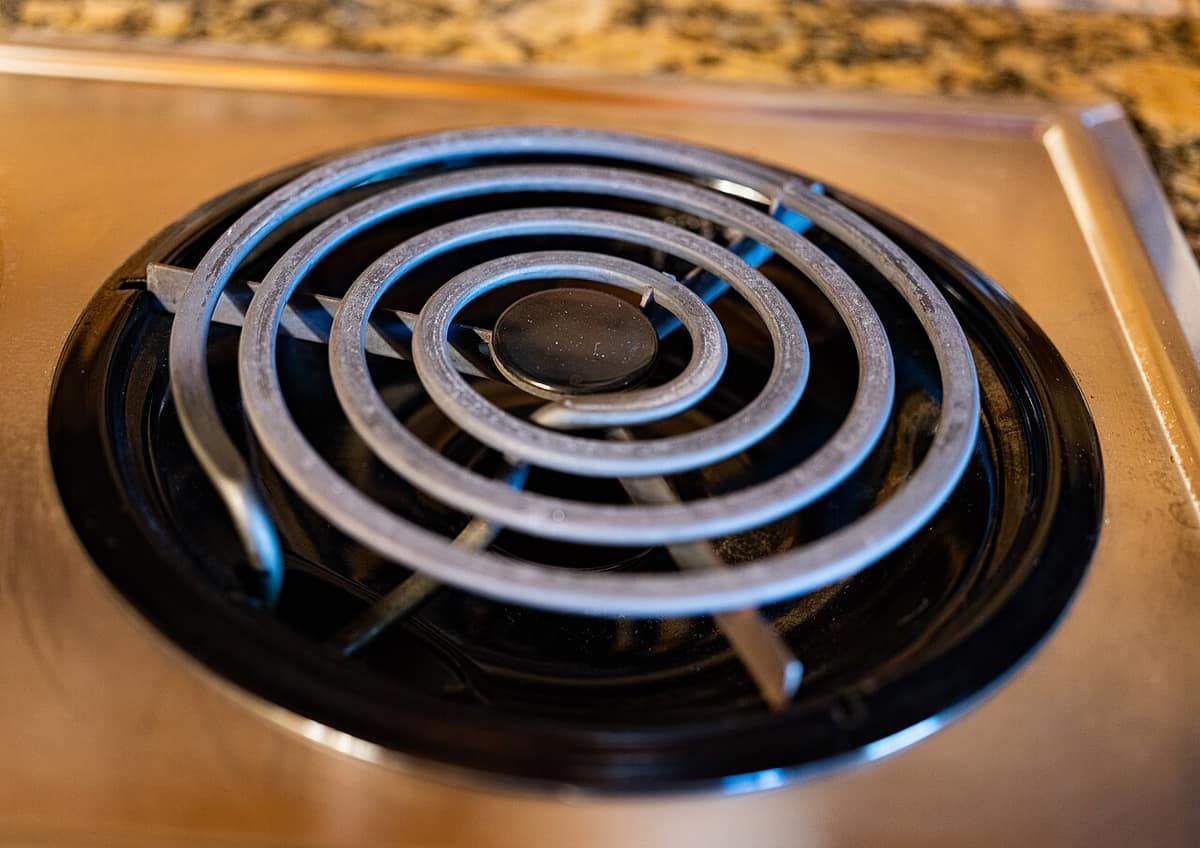
Stove shut off devices do work, with conditions, and it depends on the trigger. They can reduce the risk from unattended cooking, but only temperature-limiting controls respond to how hot the pan actually gets, and only they have a US test standard (UL 858, for electric coil ranges) and independent NIST lab work behind them. Motion, timer and smoke-alarm-triggered retrofits rely mostly on manufacturer claims. None of them puts out a fire that has already started.
That split matters because the products sold as “automatic stove shut off” work in very different ways. Below is what each type does, what independent testing shows, and who is most likely to benefit.
What problem do stove shut-off devices solve?
NFPA’s Home Cooking Fires report puts the 2017–2021 average at 158,400 home cooking fires a year, with 470 civilian deaths, 4,150 injuries and $1.15 billion in direct damage. Ranges or cooktops were involved in 53% of those fires and 88% of the deaths. Equipment left unattended was the leading factor, at 28% of fires and 48% of deaths, per the report’s Figure 3. NFPA also found electric-range households had a fire rate 2.4 times that of gas-range households.
USFA uses a different dataset: about 170,000 home cooking fires in 2021, with unattended equipment the leading factor in 37% of nonconfined cooking fires. Unattended burners are exactly what a shut-off is meant to catch; general prevention habits are covered in how to prevent kitchen fires.
What types of automatic stove shut off are there?
The key question is when the device acts relative to ignition. A temperature limiter acts as the pan overheats. Motion and timer units act on absence or elapsed time, regardless of heat. A smoke-alarm-triggered unit acts only after smoke is already in the air.
| Device type | What triggers it | Acts before or after ignition | What it cuts (power / gas) | Standard or independent test found | Known false-trigger / limitation | Example (named in words, no link) |
|---|---|---|---|---|---|---|
| Temperature-limiting (built into coil ranges, or retrofit sensor plate) | Pan-bottom temperature; UL 858 limit 385°C (725°F) average over 30 min at max, per NIST | Before, if the design works | Power to the element | UL 858; NIST TN 1986 lab tests | Two gas designs with under-body sensors failed to stop oil ignition in NIST tests; two other gas designs did not ignite oil | Electric coil ranges made since UL 858’s June 2018 requirement (per NFPA) |
| Motion / presence | No one detected in the kitchen | Before or after; ignores heat | Power to the heating elements (per iGuard) | None found | Cuts power if it detects nobody in the kitchen; a longer cook needs the extended timer set manually (per iGuard) | iGuard |
| Timer | Set time elapses | Before or after; ignores heat | Power or gas, by model | None found | Tech-enhanced Life’s author expects timers to become annoying and go unused | Generic timer shut-offs |
| Smoke-alarm-triggered | Smoke alarm keeps sounding; FireAvert’s blog cites a delay of about 30 s | After smoke is present | Power (3- or 4-prong electric models) or gas (gas model), per FireAvert’s product page | None found; no UL/ETL listing stated on product page | Depends on a working, well-placed alarm; inherits alarm nuisance trips | FireAvert |
NIST Technical Note 1986 says motion, timer and smoke-alarm retrofits exist but “would not necessarily be tested” under the ignition-prevention methods it used.
Do stove shut-offs prevent fires in lab tests?
NIST ran more than 100 experiments on four propane cooktops sold in Asia and one electric coil stove sold in the US. It also tested one retrofit plate-and-thermocouple system for coil elements. It used four pan types, about half dry and half with small amounts of canola oil. The coil technologies, including the retrofit plate, met UL 858 by keeping dry cast-iron pans below the limit temperature and prevented ignition in the oil tests.
The gas results were mixed. Two gas cooktops (Stoves 3 and 4 in the report) did not ignite oil in any pan type. The other two, with limit sensors under the stove body (Stoves 5 and 6), let the oil ignite with every pan type; in those tests the burner shut off only after the oil had burned away.
On Stove 6, pan temperatures at burner shut-off varied widely, 472°C ± 57°C, even though the sensor itself tripped at a steady temperature. Pan-bottom emissivity also changed the outcome. NIST’s conclusion is that ignition-prevention technology “can be effective” for gas and electric cooktops, but results depend on design details and more study is needed.
A 2022 CPSC staff letter supported extending UL 858’s Section 60A oil-ignition tests to induction units. It cites CPSC and NIST pre-ignition research going back to 1995, and notes the views are staff’s, not the Commission’s. We found no public independent lab test of motion-sensing or smoke-alarm-triggered retrofits, so the evidence for those types is thin.
Is there a stove guard safety standard?
Europe has a dedicated standard, EN 50615. According to a summary by Safera, a company that sells stove guards, Category A devices extinguish and cut power after flames appear, Category B cut power preventively, and AB do both.
Per Safera, a Category B guard must alarm when oil reaches between 200°C and 330°C, cut power before 330°C and produce at least 65 dB at 1 meter. Safera also describes a false-alarm test with water boiling on other burners. We found no US equivalent standard for retrofit stove guards.
Why do stove shut-offs trigger false alarms?
Smoke-alarm-triggered units inherit the alarm’s nuisance problems. NFPA says smoke alarms should be at least 20 feet from the range where possible and never within 10 feet, and that UL-certified alarms have had to pass a cooking nuisance test since June 30, 2021. FireAvert says its delay of about 30 seconds exists to ignore brief alarms. Placement details are in smoke detector near the kitchen.
Motion units can cut power during a long simmer if the cook steps out; iGuard says users can set an extended cooking timer to avoid that. Timer-only devices have the opposite problem: Tech-enhanced Life says timers become bothersome and may not get switched on. Its author also says he did not test the shut-off products.
Can a stove shut-off put out a fire?
No. A shut-off does not put out a fire that is already burning. In NIST’s tests on two gas cooktops, the oil ignited and burned out before the sensor cut the fuel. Smoke-alarm-triggered units act only after smoke exists and need a working alarm. None addresses clothing ignition, which NFPA says was under 1% of cooking fires but 7% of cooking fire deaths.
The core advice still applies: NFPA says frying, broiling and boiling need continuous attention, and USFA says to stand by your pan and turn the burner off if you leave the kitchen.
For a small grease fire, NFPA says to slide a lid over the pan, turn off the burner and keep it covered until completely cool. For what to do if a fire grows, see how to put out a grease fire. Canisters that do extinguish flames are a separate product, covered in do stovetop fire suppressors work.
Are stove shut off devices worth it?
They make the most sense where unattended cooking is a known pattern. NFPA says more than one-quarter of people killed in cooking fires were asleep. Households with memory loss, a cook who dozes off, or renters who can’t replace an older coil range are the clearest cases. NFPA notes that because ranges last a long time, the safer post-2018 coil ranges may take years to become common.
They matter less if you already own an electric coil range made after UL 858’s June 2018 requirement, which per NFPA must meet the oil-ignition requirement, or if nobody leaves cooking unattended.
Tech-enhanced Life cites $150 to $500; FireAvert’s product page listed $249.99, sold out when we checked. Manufacturer figures such as iGuard’s claim of preventing over 1 million potential forgotten cooking fires are unverified. For caregiver-specific choices see stove shut off for dementia; for product picks see best kitchen safety devices and our iGuard research review.
Does my stove already have automatic shut off?
Check when your range was made; the owner’s manual or manufacturer can confirm the date and any built-in limiter. Per NFPA, electric coil ranges made after UL 858’s requirement took effect in June 2018 must not ignite oil in a cast-iron pan, or must keep the pan bottom at or below 725°F (385°C). For smooth-top, induction and gas ranges, our sources found no equivalent mandatory US requirement; the CPSC letter concerns a proposal for induction.
More on kitchen safety devices
- Best kitchen safety devices
- iGuard electric stove review
- Stovetop FireStop Rangehood review
- Stove shut off for dementia
- Do stovetop fire suppressors work?
- How we research
Frequently asked questions
Will a stove shut off device put out a fire?
No. A shut-off cuts power or gas; it does not extinguish flames. In NIST's cooktop experiments, two gas cooktops with shut-off sensors cut the fuel only after the oil had already ignited and burned away. For a small grease fire, NFPA advises sliding a lid over the pan, turning off the burner and keeping the pan covered until it is completely cool.
Do new electric stoves already have automatic shut off?
New electric coil ranges have built-in temperature limiting rather than a shut-off timer. Per NFPA, UL 858 requirements that took effect in June 2018 mean coil ranges must not ignite oil in a cast-iron pan, or must keep the pan bottom at or below 725°F (385°C). No equivalent US requirement for smooth-top or gas ranges was found in our sources.
Why does my stove shut off device keep turning off the stove while I'm cooking?
It depends on the trigger. A motion or presence unit cuts power when it detects nobody in the kitchen, which can interrupt a long simmer; iGuard says users can set an extended cooking timer. A smoke-alarm-triggered unit fires when the alarm does, so an alarm too close to the range causes nuisance shut-offs. NFPA advises alarms at least 20 feet from the range where possible.
How much do stove shut off devices cost?
Tech-enhanced Life puts automatic shut-off devices at roughly $150 to $500 and says the pricier models don't add useful features. FireAvert's product page listed its shut-off at $249.99, shown as sold out when we checked, while an older FireAvert blog post quotes $59.99, so prices have changed. iGuard's homepage did not show a price.
Is there a safety standard for stove shut off devices in the US?
Only for built-in temperature limiting on electric coil ranges, which UL 858 covers. NIST notes that motion, timer and smoke-alarm-triggered retrofits would not necessarily be tested under those ignition-prevention methods. Europe has EN 50615 for stove guards; no US equivalent for retrofit stove guards was found in the sources we read.
Sources
- content.nfpa.org/-/media/Project/Storefront/Catalog/Files/Research/NFPA-Research/US-Fire-Problem/Fire-causes/oscooking.pdf
- govinfo.gov/content/pkg/GOVPUB-C13-7a9abd8cb269fdcad5ee70fc2481f0f6/pdf/GOVPUB-C13-7a9abd8cb269fdcad5ee70fc2481f0f6.pdf
- usfa.fema.gov/prevention/home-fires/prevent-fires/cooking
- cpsc.gov/s3fs-public/CPSC-letter-to-UL-858-Proposal-on-Induction-cooktops-11-20-2022.pdf
- safera.com/what-is-en-50615-the-stove-guard-standard-in-practice
- techenhancedlife.com/solutions/stove-auto-shut-and-alarm
- fireavert.com/products/auto-stove-shutoff
- fireavert.com/blogs/home-safety/automatic-stove-shut-off-guide
- iguardfire.com