How to Use a Fire Extinguisher: PASS Steps & Distance
The PASS method, how far to stand, how long a home extinguisher sprays, and when to leave instead, per USFA, OSHA and fire departments.
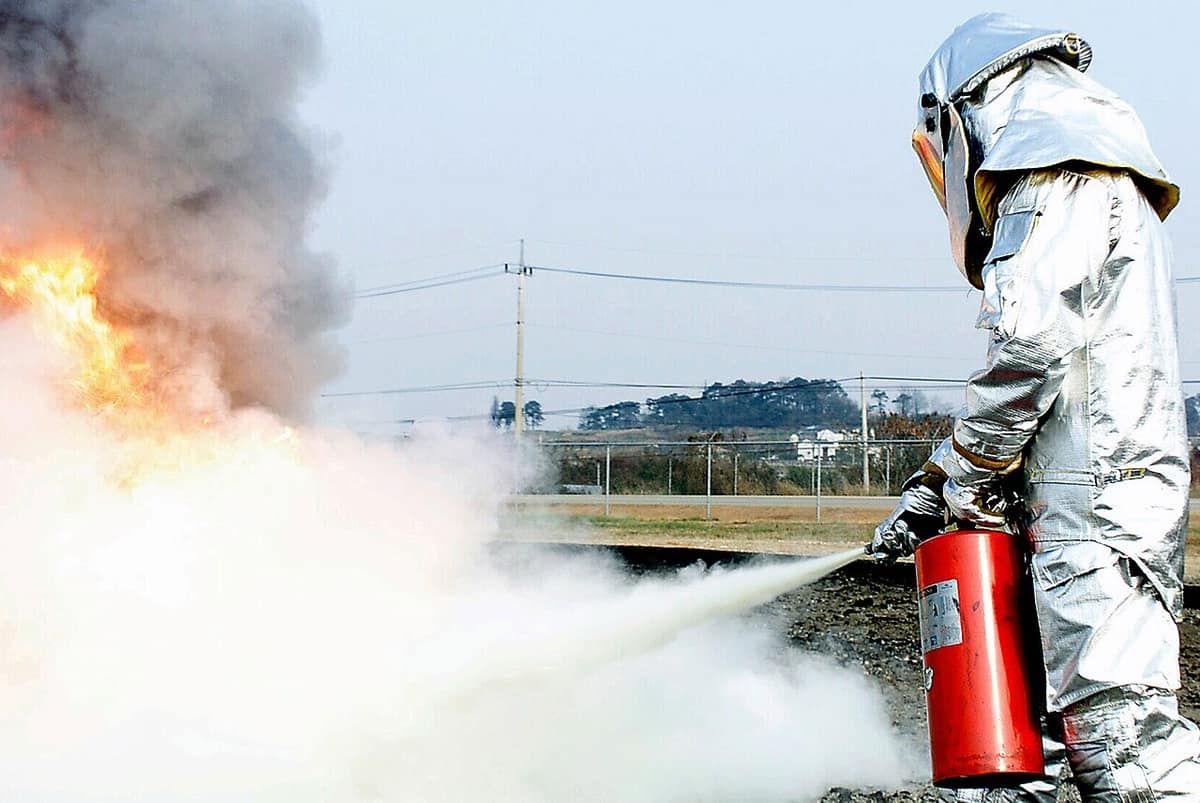
To use a fire extinguisher, the U.S. Fire Administration’s PASS method is: Pull the pin, Aim low at the base of the fire, Squeeze the lever slowly and evenly, and Sweep side to side. Only try it if the fire is small and contained, the fire department has been called, and you have a clear escape route. Portland Fire & Rescue says to stand six to eight feet away with your back to an exit.
Leaving is always an acceptable answer. Both USFA and OSHA put the decision to fight or evacuate ahead of the PASS steps, and so does this page. An extinguisher can help with a small fire; it is not a guarantee.
Before you pull the pin: the 5-point go/no-go check
The U.S. Fire Administration says to use an extinguisher only when all five of these are true:
- Others have been alerted and someone has called the fire department.
- You are physically able to use the extinguisher. USFA says young children and older adults should not use fire extinguishers.
- The fire is small and contained to a single object or surface, like a pan or a wastebasket.
- You are safe from the fire’s toxic smoke.
- You have a clear escape route.
If you’re unsure, USFA says to alert others, leave the building and call 911 from a mobile or a neighbor’s phone. Portland Fire & Rescue adds more conditions, including that you know what is burning and have the right type of extinguisher, and that you have already read its instructions. Otherwise, Portland says to leave immediately and close off the area.
OSHA’s rule is blunter: “If you have the slightest doubt about your ability to fight a fire…EVACUATE IMMEDIATELY!” It also says to identify a safe evacuation path before approaching the fire, and not to let the fire, heat or smoke come between you and that path.
The PASS method, step by step
These four steps are from USFA, with details added from OSHA, Portland Fire & Rescue and Escondido Fire Department where they say more.
- Pull. Pull the pin, holding the extinguisher with the nozzle pointed away from you (USFA). Portland says the pin unlocks the operating lever; OSHA notes that pulling it also breaks the tamper seal.
- Aim. Aim low, at the base of the fire (USFA, OSHA), not at the flames (Escondido, citing NFPA). On a CO2 extinguisher, OSHA warns not to touch the plastic discharge horn, because it gets very cold and may damage skin.
- Squeeze. Squeeze the lever slowly and evenly (USFA) to release the agent. Portland and Escondido note that releasing the lever stops the discharge.
- Sweep. Sweep side to side at the base of the fire until it appears to be out (OSHA). If it re-ignites, OSHA says to repeat the process.
Aiming at the base matters because, as Escondido puts it, to put out the fire you must extinguish the fuel. Per OSHA, dry chemical agents coat the fuel with a thin layer of powder that separates it from oxygen and interrupts the chemical reaction.
How far should you stand from a fire?
The sources give different kinds of answers rather than one shared number:
- Portland Fire & Rescue says to keep your back to an exit and stand six to eight feet away. It also says most home extinguishers have a short range of 6 to 10 feet.
- Escondido Fire Department, republishing NFPA guidance, says to stand several feet away and move closer once the fire starts to diminish.
- OSHA’s instructions don’t give a distance; they say to discharge the extinguisher within its effective range.
Escondido also says different extinguishers recommend operating them from different distances, which is why the practical answer is to read your own extinguisher’s label before you ever need it. On position, the sources line up: Portland and Escondido both say to keep an exit at your back, and OSHA says never to let the fire come between you and your way out.
How long does a home fire extinguisher spray?
Not long. Portland Fire & Rescue says most home units discharge completely in 8 to 10 seconds, and separately warns that portable extinguishers discharge within 8 to 30 seconds. Escondido, citing NFPA, says a typical fully charged extinguisher holds 10 to 15 seconds of extinguishing power.
That is why the go/no-go check and reading the label come first. Portland says that if the fire does not begin to go out immediately, leave the area at once, and OSHA says to evacuate immediately if the extinguisher empties before the fire is out.
The figures below are published guidance from each source, not Kitchen Watcher measurements.
| Source | Recommended distance | Discharge time (seconds) | Leave immediately if… | Notes |
|---|---|---|---|---|
| USFA | Not stated on the page | Not stated on the page | You’re unsure, or any of its 5 checklist answers is no | Source of the PASS wording used here |
| OSHA | “Within its effective range” | Not stated on the page | Extinguisher empties first, fire grows past its early stage, or you have the slightest doubt | Warns not to touch a CO2 discharge horn |
| Portland Fire & Rescue | 6 to 8 ft; most home units reach 6 to 10 ft | 8 to 10 for most home units; 8 to 30 in its general warning | Fire isn’t confined, 911 not called, no escape route, fire type unknown, or fire doesn’t start to go out | Water extinguishers only on Class A fires |
| NFPA via Escondido Fire Dept | Several feet, moving closer as the fire shrinks | 10 to 15 when fully charged | Fire is spreading, wrong type, or it could block your exit | Stand with an exit at your back |
Which extinguisher class matches which fire?
USFA and OSHA describe the same five classes: A for ordinary materials like wood, paper and cloth; B for flammable liquids including grease and oil; C for electrical equipment; D for combustible metals; and K for cooking oils and fats. Portland explains that on a label such as 2A:10BC, larger numbers mean a larger fire of that class. The C carries no number because it only indicates the extinguisher is safe on electrical fires. Portland also warns it is very dangerous to use a water extinguisher on anything other than a Class A fire.
For a pan of burning oil, USFA’s cooking-safety advice is to cover the pan with a lid or baking sheet. The full steps are in how to put out a grease fire, and choosing a unit for the kitchen is covered in what fire extinguisher for a kitchen.
After the fire is out: watch, replace, get it checked
Back away from the fire in case it flames up again, per OSHA, and watch the area for a few minutes in case it re-ignites, per Escondido, citing NFPA. Portland says to always have the fire department inspect the fire site, even if you think you’ve put the fire out.
Escondido says to recharge all extinguishers immediately after use, no matter how much was discharged. Portland says disposable extinguishers can only be used once and must be replaced. Kidde, for example, describes its Basic 110 (FA110G) as rated 1-A:10-B:C with a “12-year service-free design,” footnoted to NFPA 10’s rules for single-use extinguishers (manufacturer claims); our Kidde FA110G review covers what else is known about it.
Get ready now, not during a fire
- Check it regularly. USFA says to make sure nothing blocks it, the pressure is at the recommended level, the can, hoses and nozzles are not damaged, dented or rusted, and it is clean. How long a unit lasts is covered in how long fire extinguishers last.
- Have enough of them. MedlinePlus says to keep at least one on each level of the home, with one in the kitchen and one in the garage.
- Teach everyone. MedlinePlus says to teach everyone in the family how to use one, because in an emergency you must be able to act fast.
- Check for recalls. To find out whether your unit is affected by a recall, see how to check a Kidde extinguisher recall.
Preventing the fire in the first place is the better plan, and how to prevent kitchen fires covers that. USFA reports that unattended equipment was the leading factor contributing to ignition in nonconfined home cooking fires, at 37%.
More on kitchen fire safety
- Best kitchen safety devices
- How to put out a grease fire
- What fire extinguisher for a kitchen
- Do stovetop fire suppressors work?
- How we research
Frequently asked questions
What does PASS stand for on a fire extinguisher?
PASS stands for Pull, Aim, Squeeze, Sweep. Per the U.S. Fire Administration, pull the pin with the nozzle pointed away from you, aim low at the base of the fire, squeeze the lever slowly and evenly, and sweep the nozzle side to side. OSHA adds that pulling the pin also breaks the tamper seal.
How far should you stand from a fire when using an extinguisher?
Portland Fire & Rescue says to keep your back to an exit and stand six to eight feet away, and notes most home units reach only 6 to 10 feet. Escondido Fire Department, citing NFPA, says stand several feet away and move closer as the fire shrinks, and that different extinguishers recommend different distances. OSHA says only to stay within the unit's effective range. Check your own extinguisher's label.
How long does a home fire extinguisher last when you squeeze it?
Seconds, not minutes. Portland Fire & Rescue says most home units discharge completely in 8 to 10 seconds, and warns that portable extinguishers discharge within 8 to 30 seconds. Escondido Fire Department, citing NFPA, says a typical fully charged extinguisher holds 10 to 15 seconds of extinguishing power. OSHA says to evacuate immediately if it empties before the fire is out.
When should you not use a fire extinguisher?
USFA says to use one only when every answer on its checklist is yes: others are alerted and the fire department is called, you're physically able, the fire is small and contained to one object or surface, you're safe from toxic smoke, and you have a clear escape route. If you're unsure, USFA says alert others, leave the building and call 911.
What do you do after using a fire extinguisher?
Back away and keep watching. OSHA says to back away in case the fire flames up again, and Escondido Fire Department, citing NFPA, says to watch the area for a few minutes. Escondido says to recharge or replace the extinguisher immediately after any use, and Portland Fire & Rescue says to have the fire department inspect the site even if you think the fire is out.
Sources
- usfa.fema.gov/prevention/home-fires/prepare-for-fire/fire-extinguishers
- osha.gov/etools/evacuation-plans-procedures/emergency-standards/portable-extinguishers/use
- osha.gov/etools/evacuation-plans-procedures/emergency-standards/portable-extinguishers/about
- portland.gov/fire/your-safety/portable-fire-extinguisher-guide
- escondido.gov/600/Fire-Extinguishers
- usfa.fema.gov/prevention/home-fires/prevent-fires/cooking
- medlineplus.gov/ency/patientinstructions/000390.htm
- kidde.com/products/fire-extinguishers/basic-110-fire-extinguisher